The Staffs Favorite Fungi Books
| November 22, 2019
1.) Fantastic Fungi How Mushrooms Can Heal Shift Consciousness and Save the Planet

Companion to the film Fantastic Fungi.
Contributions from Michael Pollan Andrew Weil Eugenia Bone and many more expterts make Fantastic Fungi an awe inspiring visual journey through the exotic little known realm of fungi and its amazing potential to positively influence our lives.
An all star team of professional and amateur mycologists artists foodies ecologists doctors and explorers joined forces with time lapse master Louie Schwartzberg to create Fantastic Fungi the life affirming mind bending film about mushrooms and their mysterious interwoven rootlike filaments called mycelium. What this team reveals will blow your mind and possibly save the planet. This visually compelling companion book of the same name edited by preeminent mycologist Paul Stamets will expand upon the film in every way through extended transcripts new essays and interviews and additional facts about the fantastic realm of fungi.
Fantastic Fungi is at the forefront of a mycological revolution that is quickly going mainstream. In this book learn about the incredible communication network of mycelium under our feet which has the proven ability to restore the planet’s ecosystems repair our health and resurrect our symbiotic relationship with nature. Fantastic Fungi aspires to educate and inspire the reader in three critical areas: First the text showcases research that reveals mushrooms as a viable alternative to Western pharmacology. Second it explores studies pointing to mycelium as a solution to our gravest environmental challenges. And finally it details fungi’s marvelous proven ability to shift consciousness.
Motivating both the visually stunning film and this follow up book is an urgent mission to change human consciousness and restore our planet. More Reviews On Amazon
2.) The Book of Fungi A Life-Size Guide to Six Hundred Species from around the World
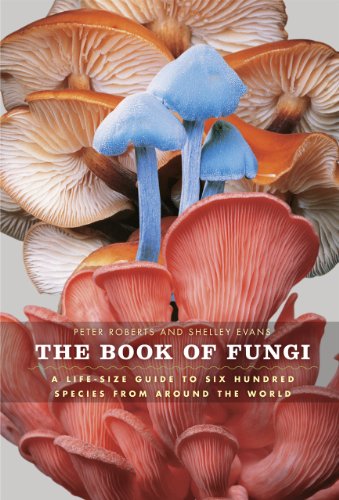
Colorful mysterious and often fantastically shaped fungi have been a source of wonder and fascination since the earliest hunter gatherers first foraged for them. Today there are few if any places on Earth where fungi have not found themselves a home. And these highly specialized organisms are an indispensable part of the great chain of life. They not only partner in symbiotic relationships with over ninety percent of the world’s trees and flowering plant species they also recycle and create humus the fertile soil from which such flora receive their nutrition. Some fungi are parasites or saprotrophs; many are poisonous and yes hallucinogenic; others possess life enhancing properties that can be tapped for pharmaceutical products; while a delicious few are prized by epicureans and gourmands worldwide.
In this lavishly illustrated volume six hundred fungi from around the globe get their full due. Each species here is reproduced at its actual size in full color and is accompanied by a scientific explanation of its distribution habitat association abundance growth form spore color and edibility. Location maps give at a glance indications of each species’ known global distribution and specially commissioned engravings show different fruitbody forms and provide the vital statistics of height and diameter. With information on the characteristics distinguishing features and occasionally bizarre habits of these fungi readers will find in this book the common and the conspicuous the unfamiliar and the odd. There is a fungal predator for instance that hunts its prey with lassos and several that set traps including one that entices sows by releasing the pheromones of a wild boar.
Mushrooms morels puffballs toadstools truffles chanterelles—fungi from habitats spanning the poles and the tropics from the highest mountains to our own backyards—are all on display in this definitive work.
3.) Mycelium Running How Mushrooms Can Help Save the World
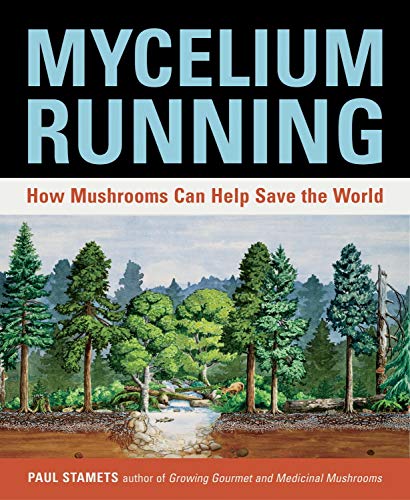
Mycelium Running is a manual for the mycological rescue of the planet. That’s right: growing more mushrooms may be the best thing we can do to save the environment and in this groundbreaking text from mushroom expert Paul Stamets you’ll find out how.
The basic science goes like this: Microscopic cells called “mycelium” the fruit of which are mushrooms recycle carbon nitrogen and other essential elements as they break down plant and animal debris in the creation of rich new soil. What Stamets has discovered is that we can capitalize on mycelium’s digestive power and target it to decompose toxic wastes and pollutants (mycoremediation) catch and reduce silt from streambeds and pathogens from agricultural watersheds (mycofiltration) control insect populations (mycopesticides) and generally enhance the health of our forests and gardens (mycoforestry and myco gardening).
In this comprehensive guide you’ll find chapters detailing each of these four exciting branches of what Stamets has coined “mycorestoration ” as well as chapters on the medicinal and nutritional properties of mushrooms inoculation methods log and stump culture and species selection for various environmental purposes. Heavily referenced and beautifully illustrated this book is destined to be a classic reference for bemushroomed generations to come. More Reviews On Amazon
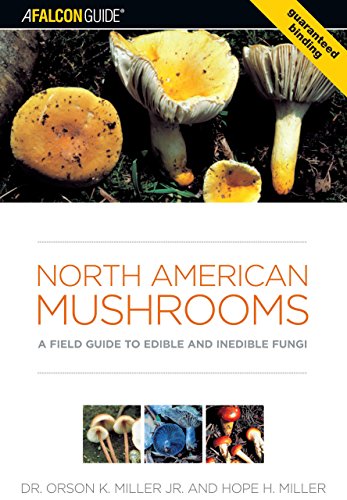
4.) North American Mushrooms A Field Guide To Edible And Inedible Fungi (Falconguide)
5.) It’s a Fungus Among Us The Good the Bad the Downright Scary
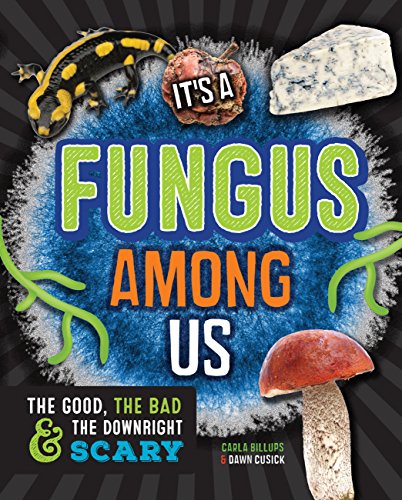
A 2018 Outstanding Science Trade Book for Students: K 12 (National Science Teachers Association and the Children’s Book Council)
Fungus is more than just mushrooms. It’s a Fungus Among Us shows off big and small fungi that do everything from consume jet fuel to creating actual zombies!
In It’s a Fungus Among Us you’ll meet the wild group of organisms that can turn ants into zombies and eat trillions of pounds of feces every day. They’re not all gross though these are the same types of organisms that make cheese stretchy add sour tastes to candy and make bread rise!
We’re talking about fungus! Different kinds of fungi do incredible things; did you know that in future they may even help save the environment because they can eat plastics in landfills and jet fuel from ocean crash sites. When you read It’s a Fungus Among Us you’ll learn about outdoor adventures kitchen experiments and get an introduction to Humungous Fungus a 38 acre fungus with an ice cream named after it that holds the record for the world’s largest organism.
Feast your eyes on hundreds of full color photos check out activities and experiments and learn all kinds of wild and wacky information from these unique organisms.
6.) We Are Fungi
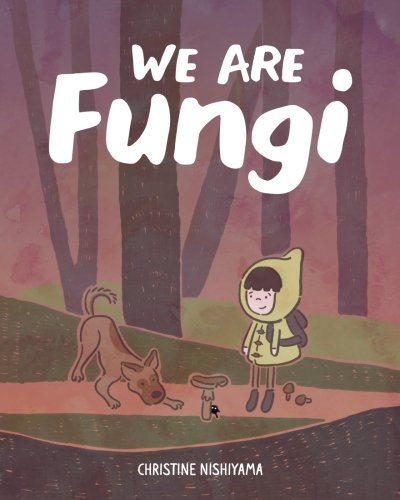
Enter our world. The world of fungi. The most mysterious and misunderstood kingdom on the planet. We are not plants. We are not animals. So what are we? From Veiled Ladies to Bleeding Teeth learn how we eat live and control a part of the world you rarely even notice. Peek beneath the crispy leaves peer inside your old lunch box and poke between your smelly toes… We’re here we’re growing and even when you think you can’t see us… …we can always see you. Christine Nishiyama’s debut picture book combines science with story fact with fiction and real life wonders with magical mysteries. This genre bending picture book tells dual stories side by side. A factually accurate story is told through words while a more mysterious story is told through pictures following the journey of a curious young girl as she ventures into the woods to hunt for mushrooms. As dusk falls weird things begin to happen and as she travels deeper and deeper into the woods she ends deeper and deeper in the world of fungi. A creepy story that aims to break the rules of children’s books challenge the notion of boy books and girl books and revitalize the nonfiction genre this completely original picture book is unlike any other book on the market and will be sure to delight excite and inspire you and your child. More Reviews On Amazon
7.) Mushrooms How to Identify and Gather Wild Mushrooms and Other Fungi

An authoritative field guide to more than 450 species of wild mushrooms from around the world Mushrooms shows the life cycle and features of a mushroom what supplies are needed for mushroom foraging and how to take a spore deposit.
A photographic field guide forms the heart of the book providing information on size range and habitat; clear images and illustrations of specimens; and information on what’s poisonous and what’s edible — making this the ultimate guide to mushrooms.
8.) Fungi Mushrooms Toadstools Molds Yeasts and Other Fungi (Class of Their Own (Paperback))
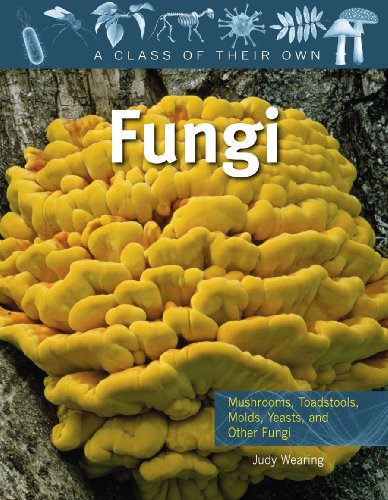
There are hundreds of thousands of different known fungi with many still to be discovered and developed. This interesting book features an examination of the four major groups: yeasts toadstools chytrids and bread molds. Key characteristics of fungi are highlighted such as spore production fungis need to feed and their use of long branching cells known as hyphae to absorb nutrients from the environment. Special sections explore such varieties as saprophytes which feed on dead and decaying matter; parasites which often do considerable harm to other species; and species that form mutualistic relationships with other species to form composite organisms such as lichen. Case histories involving fungi include penicillin and the fight against disease and genetically modified (GM) products in food technology. More Reviews On Amazon
9.) Teaming with Fungi The Organic Grower’s Guide to Mycorrhizae (Science for Gardeners)

Teaming with Fungi is an important guide to mycorrhizae and the role they play in agriculture horticulture and hydroponics. Almost every plant in a garden forms a relationship with fungi and many plants would not exist without their fungal partners. By better understanding this relationship home gardeners can take advantage of the benefits of fungi which include an increased uptake in nutrients resistance to drought earlier fruiting and more. This must have guide will teach you how fungi interact with plants and how to best to employ them in your home garden.
10.) National Audubon Society Field Guide to North American Mushrooms (National Audubon Society Field Guides)

The most comprehensive field guide available to North American mushrooms a must have for any enthusiast’s day pack or home library from the go to reference source for over 18 million nature lovers.
Featuring a durable vinyl binding and over 700 full color identification photographs organized visually by color and shape the National Audubon Society Field Guide to North American Mushrooms is the perfect companion for any mushroom hunting expedition. Each species is accompanied by a detailed physical description information on edibility season habitat range look alikes alternative names and facts on edible and poisonous species uses and folklore. A supplementary section on cooking and eating wild mushrooms and illustrations identifying the parts of a mushroom round out this essential guide. More Reviews On Amazon

